The complicated analyses which economists endeavor to carry through are not mere gymnastic. They are instruments for the bettering of human life. The misery and squalor that surround us, the injurious luxury of some wealthy families, the terrible uncertainty overshadowing many families of the poor — these are evils too plain to be ignored. By the knowledge that our science seeks it is possible that they may be restrained. Out of the darkness light! To search for it is the task, to find it perhaps the prize, which the ‘dismal science of Political Economy’ offers to those who face its discipline.
§ Welfare Economics in the Classical Period
Every principles textbook teaches that economics is “the science which studies human behavior as a relationship between ends and scarce means which have alternative uses.” Robbins, L. An Essay on the Nature and Significance of Economic Science. London: MacMillan and Co. 1932, p. 15. This is not what the classical economists were about. Whereas scarcity; has to do with satisfaction of consumers' wants, classical political economy's concern is with the maximization of material output.
Adam Smith emphasized the importance of the division of labor as the engine of growth, and held that the role of government was to promote the growth of labor output. The source of national wealth is the division of labor, and the degree of division is determined by the extent of the market. The greater the degree of division, the more workers can specialize in tasks requiring the skills at which they excel. And the division of production into specialized tasks is the opportunity for trade with others, which allows each worker to produce what he is best at, and trade for what he needs. For we moderns, taxes on trade insert a wedge between supply and demand prices, thereby guarantying that the marginal benefit of consumption will not equal the marginal cost of production. For Smith, trade barriers decrease the opportunities to take advantage of economies of scale, non-convexities, in production.
Preceding Smith and the English school, the central concern of the French physiocrats was the maximization of material wealth. The wealth of a nation is its agricultural output, and the source of that output is agricultural production. They gave us the phrase laissez faire, but their argument for it was not the increased satisfaction of consumers. Government regulation they argued, favored industry at the expense of agriculture. Meeks, R. L. 1962. The Economics of Physiocracy, London: Allen and Unwin, p. 326
Although Smith, Ricardo, and other classical writers are concerned with efficient material production rather than satisfaction of wants, it was understood that this was a means to an end. Perhaps the greatest accomplishment of the Wealth of Nations is that Smith is the first in the English tradition to recognize that the welfare of a nation is measured by the standsard of living of its populace rather than the size of its treasury.
Consumption is the sole end and purpose of production; and the interest of the producer ought to be attended to only so far as it may be necessary for promoting that of the consumer. The maxim is so self-evident, that it would be absurd to attempt to prove it.
No society can surely be flourishing and happy, of which the far greater part of the members are poor and miserable…
The more interesting question to ask is why, and when, did welfare economics emerge as a separate field of study withing the broad umbrella of political economy.
§ The Marginal Utilitarians
An analytical system of welfare economics does not begin to emerge until the middle of the 19th century. Many classical writers — Ricardo, for example — were just not that interested in ethical questions. Their concern was much more with the workings of the economy and the organization of production than an assessment of its outcomes. Among those who had an interest there was sharp disagreement. Smith wrote,
The real price of every thing, what every thing really costs to the man who wants to acquire it, is the toil and trouble of acquiring it.
The French thought differently about this. Say responds to Smith thus:
“Il attribue au seul travail de l'homme le pouvoir de produire des valeurs. C'est une erreur.” He attributes to human work alone the power to produce value. This is a mistake.
In their pursuit of how output is maximized, Smith and Ricardo left aside the question of how it is best distributed. Furthermore, they failed to connect consumer wants to factor demand. Say is a transitional figure in the transition from classical to neoclassical thought. He, and also Malthus, understood that in determining market value, demand played a role alongside supply. For instance,
Or, cette qualité qui fait qu'une chose a de la valeur, il est évident que c'est son utilité. Les hommes n'attachent du prix qu'aux choses qui peuvent servir a leur usage; c'est en vertu de cette qualité, qu'ils consentent a faire un sacrifice pour les achater; car on ne donne rien pour se procurer ce qui n'est bon a rien.
Now, this quality which makes a thing valuable, is evidently its utility. Men only attach value to things which can serve their use; it is by virtue of this quality, that they consent to make a sacrifice to buy them; for one gives nothing to obtain that which is good for nothing.
Previous to Mill, the consumer was not an important part of
the analytical engine. Creating consumer wealth was Adam
Smith's goal, but the consumer is not part of his analytical
appartus, unimportant for the determination of prices and
wages. The labor theory of value solves all of that.
Poverty
and the distribution of wealth were of concern to Smith. See
here
for a discussion of Smith's views. But again, they were
not an object of his analytical apparatus.
The program of Mill's Principles of Political
Economy

is to put the
received, primarily Ricardian theory on a more scientific
basis. 1848,
London: Longmans, Green and Co. To do this he
deployed economic man, which he created (but did
not name) in 1836:
[Political Economy] does not treat of the whole of man’s nature as modified by the social state, nor of the whole conduct of man in society. It is concerned with him solely as a being who desires to possess wealth, and who is capable of judging of the comparative efficacy of means for obtaining that end. First published in the London and Westminster Review, Oct. 1836, 21, p. 1. See Bee and Desmarais-Tremblay (2023) for a history of the concept and the term homo economicus.
Although the interpolation of economic man allows a discussion of demand, this only serves the problems of distribution (Bk. 2) and exchange (Bk. 3). The determination of value and optimal allocation of factors is not affected by the distribution of output. According to Mill, the laws of production are, like the laws of physics, fundamental and immutable, while distribution and exchange are responsive to the social and institutional environment. Nonetheless, consumers for the first time play a role in the analysis, in the process of distribution.
Utilitarianism
Utilitarianism has antecedants in the ancient world. Some see precursors in the thought of Aristotle. The Epicurians, one of the three major schools of Hellenistic philosophy, taught hedonism, the idea that pleasure is the ultimate good and pain the ultimate bad. Utilitarianiam itself has a long history. The dictum of the greatest number seems first to have appeared in the writings of Leibniz around 1700. See, Joachim Hruska. 1991. “The greatest happiness principle and other early German anticipations of utilitarian theory”. Utilitas 3(2) pp. 165–177. Classical utilitarianism, however, is a product of 18th and 19th century Britain.
The first classical utilitarian is (arguably) the Scottish enlightenment philosopher Frances Hutcheson. He wrote,
In the same manner, the moral evil, or vice, is as the degree of misery, and number of sufferers; so that, that action is best, which procures the greatest happiness for the greatest numbers; and that, worst, which, in like manner, occasions, misery.
The principal English Utilitarians are Jeremy Bentham, John Stuart Mill, and later, and Henry Sidgwick.
Some speak of a marginal revolution in economics because from Jevons, Menger, and Walras, marginalism swept through economics, displacing earlier classical models with constant returns to labor, notto mention schools of legal, historical and descriptive analysis. But the revolution was a half-century in the making. Early marginalists include among the French, Dupuit (1844, 1849) and Cournot, and among the Germans Rau (1826–37), von Thünen (1826, 1850), Gossen (1854), and others.Cournot, Recherches sur les Principes Mathématiques de la Théorie des Richesses; Dupuit, “ De la mesure de l'utilité des travaux publics” and “De l'influence des péages sur l'utilité des vois de communication” Annales des Ponts et Chausseés: Partie Technique. Mémoires et documents, 8: 332–375 and 17: 1849; Rau, Lehrbuch der Politischen Ökonomie, 2nd ed. and beyond; von Thünen, Die Isolierte Staat in Beziehung auf Landwirtschaft und Nationalökonomie. Hamburg: Friedrich Perthes.; Gossen Die Entwicklung der Gesetze des Menschlichen Verkehrs, … Braunschweig: Friedrich Bieweg und Sohn. Until Walras the French never come up with a clear statement of a marginal utility doctrine, but they were quicker to see the implications of utility for demand than were the English. This is particularly true of Dupuit, the inventor of consumer surplus.
Although Cournot was the first to use demand in an analytic model, Dupuit was the first to connect demand with utility. He claimed that inverse demand was downward sloping and convex (the latter because more people could afford goods at lower prices). Consequently, price measured the utility of the last unit sold, and so the total utility of all that was sold must be the sum of successive prices as one moves up the demand curve, hence the area under inverse demand; that is, consumer surplus. A. A. Cournot. op. cit., and J. A. Dupuit. 1844. op. cit. He did not, however, develop a general theory of demand as a consequence of optimization.
Bentham did not have a precise view of what utility is. Is it about acts and intentions, or is it a property of objects? He writes in An Introduction to the Principles of Morals and Legislation, 1789:
By the principle of utility is meant that principle which approves or disapproves of every action whatsoever, according to the tendency which it appears to have to augment or diminish the happiness of the party whose interest is in question: or, what is the same thing in other words, to promote or to oppose that happiness. I say of every action whatsoever; and therefore not only of every action of a private individual, but of every measure of government.
and also
By utility is meant that property in any object, whereby it tends to produce benefit, advantage, pleasure, good, or happiness (all this in the present case comes to the same thing), or (what comes again to the same thing) to prevent the happening of mischief, pain, evil, or unhappiness to the party whose interest is considered…
To some degree, both views are present in later marginalist economic thought. The view that each object carried utility encouraged additively separabile functional forms. The subjective view which saw utility as a product of the consumption experience came from Edgeworth and then Pareto, whose technical skills allowed them to see that additive separability was not required for the utilitarian program.
A second question concerns the scope of the program. Not explicitly discussed in the earlier writings, the issue was taken up by scholars of the early 20th century. Pareto, Pigou, and others constrained their investigations to economic or material welfare.
For ordinary purposes economic things can best be described as economic, just as blue things can best be described as blue. But if we must have a second-best description for the benefit of those who doubt whether they know what is meant by the term economic, I think we must fall back on “having to do with the more material side of human happiness,” or more shortly, “having to do with material welfare.”
And for the other side, a more famous quotation:
Here, then, is the unity of subject of Economic Science, the forms assumed by human behaviour in disposing of scarce means. … Economics is the science which studies human behaviour as a relationship between ends and scarce means which have alternative uses.
Bentham and Mill saw utility as a psychological explanation for behavior and normatively as a standard for morality. Pleasure and pain – utility – are commensense concepts, hence measurable. Practical application of utility measurement leads to maximizing the greatest good for the greatest number. They took utility to be a practical concept that could be observed and measured by a properly qualified class of people.
There is a strand of utilitarian thought that attempts to delimit in some way the domain of utility. (See below.) Among the early utilitarians this strand is most apparent in Mill. He wrote, “It is better to be a human being dissatisfied than a pig satisfied; better to be Socrates dissatisfied than a fool satisfied. And if the fool, or the pig, are of a different opinion, it is because they only know their own side of the question. JS Mill. 1863. Utilitarianism, Ch. 2. Mill went on to distinguish different kinds of pleasure (and those who prefer the higher pleasures to the lower). Of course this cannot be done without bringing other kinds of values into the moral calculus.
Jevons

Utility analysis appeared in economics as a fundamental primitive in the work of William Stanley Jevons, Carl Menger and Leon Walras. Jevons first published in 1862, and his principle theoretical contribution came a decade later.W. S. Jevons. 1871. Theory of Political Economy. London: Macmillan. Jevons wanted to understand the process of price formation in markets. In this he was much closer to Edgeworth and to Menger than to Walras, who jumped to the existence of equilibrium in well-organized markets.
Jevons is a Benthamite. In his first sentence appears the phrase, “we must undoubtedly accept what Bentham has laid down upon this subject.” And, “Pleasure and pain are undoubtedly the ultimate objects of the Calculus of Economics.” Op. cit., Ch. III. Jevons is clear about the subjective nature of utility. “It is better described as a circumstance of things arising out of their relations to man's requirements.” ibid. He distinguishes the total utility from the degree of utility, by which he means marginal utility. And finally, he identifies diminishing marginal utility as an empirical regularity and understands its importance for solving optimization problems.
Jevons understanding of utility is apparent in his nuanced discussion of value. In discussing the diamond-water pardox, he writes of three uses of the word value: value in the use of a commodity, the intensity of desire for a commodity, the esteem in which we hold it, and the value of a commodity in exchange for other commodities. He summarizes:
- Value in use = total utility;
- Esteem = final degree of utility [marginal utility];
- Purchasing power = ratio of exchange.
Jevons' analysis of exchange is not distant from Edgeworth but quite different from Walras. Jevons makes no use of demand, and does not discuss price ratios and budget lines. Instead he imagines a process of exchange. The point of his theory is to derive the proposition:
The ratio of exchange of any two commodities will be inversely as the final degrees of utility of the quantities of commodity available for consumption after the exchange is completed.op. cit. p.95–6.
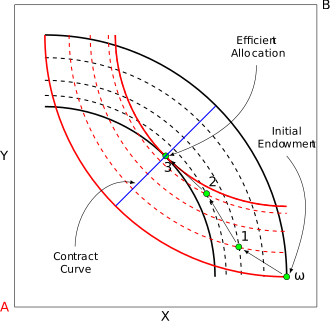
Jevon's exchange process
The process can be pictured, somewhat ironically, in an Edgeworth box. The initial endowments of traders A and B is at $\omega$. They exchange some quantities of goods; suppose $A$ gives up $\Delta x_1$ units of X for $\Delta y_1$ units of Y. They are now at allocation 1, in which they are both better off. Trader A now has consumption bundle $\omega^A+(-\Delta x_1,\Delta y_1)$ and trader B has $\omega^B+(\Delta x_1,-\Delta y_1)$. The process of exchange continues to allocation 2 alnd ultimately to allocation 3. At allocation 3 there is no trade which will improve both traders, and so the process stops. Jevons saw this process as incremental, going through several rounds to its ultimate conclusion. As Jevons put it:
Exchange will thus go on till each party has obtained all the benefit that is possible, and loss of utility will result if more were exchanged. Both parties, then, rest in satisfaction and equilibrium, and the degrees of utility have come to their level, as it were.
The trading process could terminate anywhere along the contract curve. The arguments made so far do not get trading for all pairs of individuals to end at the same point on the contract curve,to establish final market price ratios. This is the point where Jevons gets very murky. Without going into detail, Jevons tried to assimilate the individual to the social by considering trading groups. And here he makes little progress. But Jevons' contribution is nonetheless substantial. His fundamental notion is not market but exchange. He does not require price-taking behavior, nor does he require the technical apparatus of supply and demand. Notice too that individuals are not optimizing moment by moment. They are improving trade-by-trade, and the end result is the yet-to-be-named contract curve.
Jevons is on a very different path than Walras and Marshall. Jevons' research program is continued by Edgeworth, who pushes the idea of trading processes farther by moving from the individual to aggregates.
Edgeworth

Francis Ysidro Edgeworth is as odd a duck as ever paddled
round the economists' pond. He became by middle age a
caricature of the woolgathering professor. As a lecturer he
was incoherent. In one description: “when, after many
hours … he at last made the supply curve intersect the
demand curve … one knew it was a great moment. He
wagged his beard and muttered inaudible things into it. He
seemed to be in a kind of
ectasy.”As reported by
Robert Graves and quoted in P Newman,
ed. 2003. F. Y. Edgeworth's Mathematical
Psychics and Further Papers on Political
Economy. Oxford University Press p. xx. Newman's
short biography is not to be missed. Keynes Essays in
Biography also contains a sketch. Of his writing
style Kenyes wrote, “Quotations from the Greek tread on
the heels of the differential calculus, and the philistine
reader can scarcely tell whether it is a line of Homer or a
mathematical abstraction which is in course of
integration.”
Schumpeter reports that he was,
“the worst speaker and lecturer
imaginable.”JA
Schumpeter. 1954. History of Economic
Analysis. p.831.
Edgeworth is proudly utilitarian: “Of the Utilitarian calculus the central conception is Greatest Happiness, the greatest possible sum-total of pleasure summed through all time and over all sentience.”F.Y. Edgeworth. 1881. Mathematical Psychics. London: C. Kegan Paul & Co. p. vii. He goes on to write:
The application of mathematics to the world of the soul is countenanced by the hypothesis (agreeable to the general hypothe concomitant, and in some sense the other side of a physical phenomenon), the particular hypothesis adopted in these pages, that Pleasure is the concomitant of Energy. Energy may be regarded as the central idea of Mathematical Physics; maximum energy the object of the principal investigatios in that science. By aid of this conception we reduce into scientific order physical phenomena, the complexity of which may be compared with the complexity which appears so formidable in Social Science.
Edgeworth defines exact utilitarianism as entailing “the greatest quantity of happiness of sentients, exclusive of number and distribution — an end to which number and distribution are but means.” No one in economic theory with the exception of Paul Samuelson is so enamoured of physics as is Edgeworth.
Utility, as Professor Jevons says, has two dimensions, intensity and time. The unit in each dimension is the just perceivable increment. The implied equation to each other of each minimum sensibile is a first principle, incapable of proof.
Problem.—To find $(\alpha)$ the distribution of means and $(\beta)$ of labor, the $(\gamma)$ quality and $(\delta)$ number of population, so that there may be the greatest possible happiness. … Greatest possible happiness is the greatest possible integral of the differential 'Number of enjoyers${}\times{}$duration of enjoyment${}\times{}$degree thereof '…
and in a footnote to this passage, “The greatest possible value of $\int\int\int dp\,dn\,dt$ (where $dp$ corresponds to a just perceivable increment of pleasure, $dn$ to a sentient individual, $dt$ to an instant of time).”
Despite this physicophilia or perhaps because of it, Edgeworth made important contributions to the general methodology of marginal analysis and to the theory of price determination. Until Edgeworth, utility was attributed to a given quantity of each good, and the utility of a consumption bundle was the sum of the utilities of the quantities. Edgeworth demonstrated how to conduct marginal analysis without additive separability. Also, and independently, Rudolf Auspitz and Richard Lieben, Untersuchungen über die Theorie des Preises. Leipzig: Duncker & Humblot, 1889. This was not just a mathematical innovation. It moved the attribution of utility from goods per se to the commodity-wise more collective experience of consumption. Despite this innovation, Edgeworth was very much a classical utilitarian, believing that utility was nonetheless a physical quantity that could be measured. Beyond this, however, is his theory of contract and competition.
Edgeworth imagined a large number of individuals trading with one another, contracting and recontracting as they pursue their self-interest. His concern is with the “determinacy of contract” Settlement is not uniquely determined, but he identified the locus of points along which settlement may take place, and called it the contract curve.
His view of trading is quite rich. “…every agent is actuated only by self interest” and may act “…without, or with, the consent of others affected by his actions. …the first species of action may be called war; the second, contract. …economic competition …is both, pax or pact between contractors during contract, war, when some of the contractors without consent of the others recontract. … The field of competition …consists of all the individuals who are willing and able to recontract about the articles under consideration.” An agent may contract or “recontract with any out of an indefinite number…without the consent being required of, any third party…”op. cit. pp. 16–7.
He provides several arguments that each lead to the following conclusion:
That contract in a state of perfect competition is determined by demand and supply is generally accepted, but is hardly to be understood without mathematics. … The familiar pair of equations is deduced by the present writer from the first principle: Equilibrium is attained when existing contracts can neither be varied without recontract with the consent of the existing parties, nor by recontrct within the field of competition.
That is, with perfect competition equilibrium is attained
when a contract is in the core! It was more than eighty
years before Debreu and Scarf demonstrated the plausibility
of this claim, and another eleven years before Werner
Hildenbrand's general treatment.G. Debreu and
H. Scarf. 1963. “ A limit theorem on the core of an
economy”.
Pareto

Edgeworth was the first to understand that absolute
knowledge of a utility function was not necessary for
economic analysis — only knowledge of the shapes of
indifference curves. It is a small step from that
observation to the next, that increasing transformations of
utility functions preserve indifference maps, and so utility
need not be more than an ordinal measure; but this was a
step he could or would not take.I cannot
resist one more treacly quotation: “Atoms of pleasure
are not easy to distinguish and discern; more continuous
than sand, more discrete than liquid; as if they were nuclei
of the just-perceivable, embedded in circumambient
semi-consciousness. We cannot count the golden sands of
life; we cannot number the ‘innumerable smile’ of seas of
love; but we seem to be capable of observing that there is
here a greater, there a less, multitude of pleasure-units of
happiness; and that is enough.”
It is
Pareto who takes the small step for Mankind. He writes in
1900:V
Pareto. 1900. “Sunto
di alcuni capitoli di un nuovo trattato di economia
pura”. Parts I and 2, Giornale degli
Economisti 20:216–35,
511–49.
“ltà e nella forma più generale
l'equazioni dell' economia pura espri mono semplicemente il
fatto di una scelta e possono essere ricavate
indipendentemente dalla nozione di piacere e di
dolore.” — p. 221.
In its most general form, the equations of pure economics simply express the fact of a choice and can be derived independently of the notions of pleasure and pain.
Vilfredo Pareto is the unsung hero of neoclassical welfare
economics. Hero, obvious; but unsung? Neoclassical welfare
economics is largely a product of the interwar and immediate
postwar years with the exception of Pareto's development of
what we now call Pareto optimality, introduced in two 1894
articles. The idea was independendly rediscovered in the
work of Lange, Lerner, and Arrow, and Pareto's priority was
first significantly recognized only in 1950 in
I. M. D. Little's A Critique of Welfare
Economics. Pareto,
V. “Teoria matematica dei cambi
forestieri”. Giornale degli Economisti
[2] 8 (February 1894), 142–173; and “Il massimo
di utilità dato dalla libera
concorrenza” Giornale degli Economisti
[2] 9 (July 1894), 48–66.
It is not true that
Pareto's ideas were entirely unknown in the Anglo-American
sphere, but they were obscure, and his originality was
unappreciated. For example, in 1938 Abram Bergson wrote of
the first welfare theorem that, out of equilibrium (that is,
where the first order conditions fail,
“…Pareto, like Marshall, shows in an early
section of his work that, otherwise, it is possible to
increase the Ophélimité of some
individuals without that of any others being
decreased.“
A reformulation of certain aspects of welfare
economics.” Quarterly Journal of
Economics 52 p. 325.
But this is hardly the extent of Anglo-American neglect of Pareto. The Kaldor-Hicks compensation principle first appeared in the second of Pareto's cited 1894 articles. Furthermore, the idea of the Bergson-Samuelson social welfare function is first discussed by Pareto in 1913. Pareto, V. “Il massimo di utilità per una collettività in Sociologia”. Giornale degli Economisti e Rivista di Statistica [3], 46 (April 1913), 337– 341.
Even more important that Pareto optimality is the idea that welfare economics can be conducted without any requirement that marginal utility be measurable. He writes in the Manuale:
We have taken this thing called pleasure, value in use, economic utility, ophelimité, to be a quantity; but a demonstration of this has not been given. Assuming this demonstration accomplished, how would this quantity be measured? It is an error to believe that we could in general deduce the value of ophelimite from the law of supply and demand. … Hereafter, when we speak of ophelimity it must always be understood that we simply mean one of the systems of indices of ophelimity.
Pareto had a different understanding of utility than we give him credit for today. His the meaning of his welfare analysis is thus different than that which we give him credit for. Pareto used two words to discuss utility: utility, and ophelimité. He deploys the latter concept, ophelimité, in his welfare analysis. Ophelimité is the word for the utility in our sense derived from goods traded in markets, that is, economic causes. Pareto's utility is the more general word, describing utility (in our modern sense) from all sources. Moreover, Pareto assumed that ophelimité' is narrow in the sense that it measures the benefit an individual receives from his consumption, without regard for others.Pareto refers to the things whose allocation he studies as economic goods. He writes: “Let us assume that certain things capable of satisfying men's tastes exist. We will call these things economic goods. … In fact, each man experiences only one sensation, the one which corresponds to the quantity of the economic good which is assigned to him.” It seems that Pareto has no notion of externality. op. cit. III.16. The more general concept of utility encompasses both ophelimité and further social concerns. So for instance, one might derive ophelimité from the purchase of a Lamborgini and disutility from the extreme distribution of wealth that allows one to comfortably buy such an expensive car.
Returning to utility measurement, it is tempting to say that Pareto was an ordinalist. If someone today said that utility was not measurable, this is how we would label them. But Pareto's position was different. Early Pareto (e.g. the Cours d'Economie Politique) holds that utility is in principle measurable but not so in practice. Cours d'Economie Politique Lausanne: 1896. Nonetheless he noted that demand depends only on partial derivatives. So from demand one might recover partial derivatives, but need there be a utility function from which these come? This came to be known as the integrability problem, which was satisfactorily solved only in the 1970s. The Pareto of the Manuale holds that preference is the primitive concept. Manual of Political Economy 2014. Oxford: OUP. This is a critical edition that stems ultimately from the 1909 expanded 2nd edition, published in French. (See the preceding quotation.) Although Pareto was the first to operationalize this very big step, he was not a committed ordinalist; he continued to defend cardinal restrictions on his “systems of indices” up through even his final economic writing in 1911. This failure to go all the way in one who made it so far demonstrates the magnitude of the conceptual leap.
Embeddedness is a sociological expression of the idea that economic activity is shaped by and shapes the larger expanse of social life. Although attributed to the Austrian economic historian and sociologist Karl Polanyi, this idea drew Pareto to sociology and led to his writing what some regard as his best-known work, Trattato di Sociologia Generale. 1916, revised French translation 1917, published in English as The Mind and Society, 1935. Of this intellectual move he wrote,
A number of economists today are aware that the results of their science are more or less at variance with concrete fact, and are alive to the necessity of perfecting it. They go wrong, rather, in their choice of means to that end. They try obstinately to get from their science alone the materials they know are needed for a closer approximation to fact; whereas they should resort to other sciences and to into them thoroughly — not just incidentally — for their bearing on a given economic problem. Many economists are paying no attention to such interrelations, for mastery of them is a long and fatiguing task requiring an extensive knowledge of facts; whereas anyone with a little imagination, a pen, and a few reams of paper can relieve himself of a chat on “principles.” ibid. IV p. 1413.
Interestingly, Pareto posed the welfare optimization problem in the context of a socialist state wherein a Minister of Production chooses production coefficients and a Minister of Justice who allocates output so as to achieve maximal utility for each citizen. Prices are market-determined, but production is owned by the state and the government may run a budget surplus. It is an exercise to check that, subject to a fixed surplus, which amounts to a lump-sum tax, the usual first-order analysis still applies.
Pareto is a pivotal figure in the history of welfare economics. Before him welfare economics was Benthamite. Utility was cardinal, comparable, and the best society maximized the sum of individual welfares. Pareto's transition from Benthamite cardinalism of the Cours to the ordinal vision of the Manuale marks a turning point in economic thought. Interpersonal utility comparisons were banished until their return some eighty years later.
The Welfare Theorems
Mention the name Pareto to an economist today and the
immediate reaction is
“optimality”.This is
hardly Pareto's only contribution. By plotting tax data
from England, Ireland, several Italian cities and German
states, Paris, and Peru, Pareto discovered that the
cumulative distributions of income in each case were roughly
power-law with a coefficient in the neighborhood of 1.5. He
introduced his famous 80–20 rule in his
1896–7 Cours d'Economie Politique. He
regarded this fact as a fundamental law of economics, and
theorized about why it should hold. See J
Persky. 1992. “Retrospectives:
Pareto's Law”
Journal of Economic Perspectives 6(2):
pp. 181–192.
The first welfare
theorem emerges from the
1906 Manuale.This is not
to say that Pareto did it alone. Other contributors along
the way include Enrico Barone, Vilfredo Pareto, Oskar Lange,
Abba Lerner, Paul Samuelson, and Maurice Allais, culminating
in Arrow (1951) and Debreu (1951).
Allais is
famous for his work on uncertainty and in particular the
Allais' paradox critique of expected utility, but the 1988
prize to Allais was “for his pioneering contributions
to the theory of markets and efficient utilization of
resources.”
We will say that the members of a collectivity enjoy a maximum of ophelimity at a certain position when it is impossible to move a small step away such that the ophelimity enjoyed by each individual in the collectivity increases, or such that it diminishes. That is to say that any small step is bound to increase the ophelimity of some individuals while diminishing that of others.
For phenomena of type I [perfect competition], when equilibrium takes place at a point of tangency of indifference curves, the members of the collectivity enjoy a maximum of ophelimity.
A modern statement of the first welfare theorem is that in an economy with a finite number of commodities and consumers, if consumers' preferences are locally non-satiated at any competitive allocation, that allocation is Pareto efficient. This statement appears remarkably free of assumptions, because all of the work is hidden in the claim that the allocation in question is competitive at some market-clearing prices.
It is often said that the first welfare theorem is the modern explication of the working of Adam Smith's Invisible Hand.Even Ken Arrow and Frank Hahn! 😱 General Competitive Analysis. 1971. p. 5. A close reading of the text rejects this view. Smith first argues that individuals prefer to invest their capital at home rather than abroad. He goes on to say:
…, every individual who employs his capital in the support of domestic industry, necessarily endeavours so to direct that industry, that its produce may be of the greatest possible value.
The produce of industry is what it adds to the subject or materials upon which it is employed. In proportion as the value of this produce is great or small, so will likewise be the profits of the employer. But it is only for the sake of profit that any man employs a capital in the support of industry; and he will always, therefore, endeavour to employ it in the support of that industry of which the produce is likely to be of the greatest value, or to exchange for the greatest quantity either of money or of other goods.
But the annual revenue of every society is always precisely equal to the exchangeable value of the whole annual produce of its industry, or rather is precisely the same thing with that exchangeable value. As every individual, therefore, endeavours as much as he can, both to employ his capital in the support of domestic industry, and so to direct that industry that its produce maybe of the greatest value; every individual necessarily labours to render the annual revenue of the society as great as he can. He generally, indeed, neither intends to promote the public interest, nor knows how much he is promoting it. By preferring the support of domestic to that of foreign industry, he intends only his own security; and by directing that industry in such a manner as its produce may be of the greatest value, he intends only his own gain; and he is in this, as in many other cases, led by an invisible hand to promote an end which was no part of his intention.
First, Smith is concerned only with the market value of annual output. The argument is, the market value of annual output is the sum of the values of output of each individual. So each individual working to maximize his own output value contributes to maximizing the sum. Second, Smith's claim would be true at any prices, not just market prices. Even more to the point, there is no thought of the role of prices sending signals to price-taking entrepreneurs that enforce the optimizing allocation of resoources. That competitive equilibrium prices are shadow prices for resource constraints is the central message of the welfare theorems. Third, there is no thought of distribution in Smith's analysis; in fact no thought of consumers at all. There is no moral claim that maximization of total output is an ethical good. Contrast with Pareto optimality, which struggles to say something about a just distribution of economic deserts.Philosophers use of “deserts” as what people deserve, not places full of sand.
Pareto gropes towards, but does not quite reach, the second
welfare theorem. Although it was visible on the horizon for
some time, the histories report that the first credibly
rigorous proof under some carefully-stated conditions comes
from Samuelson's
1947 Foundations.Worth
remembering that Foundations was a PhD
thesis.
However, some claim that Allais had
the result in 1943.B Munier.
“The
Many Other Allais Paradoxes”. Journal of Economic
Perspectives 5(2): pp. 179–99. The work
appeared in Allais' first book, A la Recherche d'une
Discipline Économique, which is sufficiently
obscure that I've not been able to find a copy after several
years of search.
The second welfare theorem is a more difficult theorem than the first, requiring continuity and convexity assumptions. This is not saurprising; after all, it has to demonstrate equilibrium. Neither theorem is in any sense practical, because perfect competition is not practical. But the second theorem is in this regard worse than the first because operationalizing the conclusion requires lump-sum taxes, a truly ridiculous policy instrument. The second welfare theorem is best understood in a negative way, as a theorem that takes issues off the table. Suppose the theorem were false. There could be optima not achievable as competitive allocations. Were these optima endowment vactors, people would trade away from them, to some other optima (according to the first theorem). What is it about these unattainable optima that distinguishes them from the attainable set? What force drives individuals away, in other directions? All of this is taken off the table by the second theorem, which states that under some conditions this particular nightmare does not arrive. The central message of the welfare theorems is that competitive prices pay a signalling role; they are shadow prices for resource constraints in a social optimization problem. That undersgtanding would fail if the second theorem were false. One would expect ineffiences to appear when the signalling role of prices is interfered with. The US market for medical care comes to mind.
Pigou
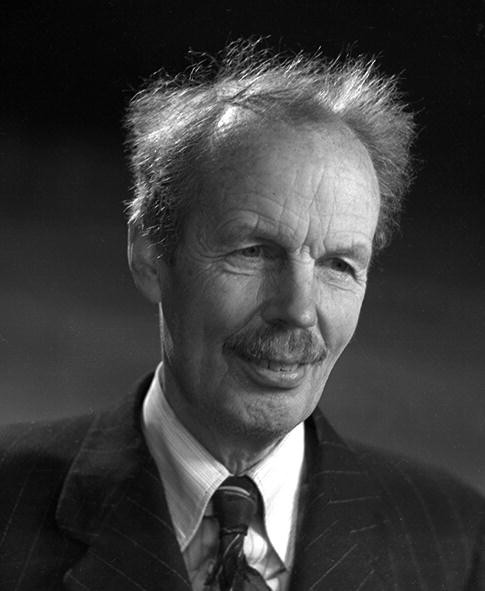
History is not linear. The last great utilitarian treatise is A. C. Pigou's 1920 masterpiece, The Economics of Welfare.AC Pigou. 1920. The Economics of Welfare. London: Macmillan & Co. Like Pareto, Pigou limits the scope of welfare economics: His 1951 article, “Some aspects of welfare economics”, lays out his views on the foundational issues.
Welfare Economics is concerned to investigate the dominant influences through which the economic welfare of the world, or of a particular country, is likely to be increased. The hope of those who pursue it is to suggest lines of action—or non-action—on the part of the State or of private persons that might foster such influences.
This is an exciting agenda, but Pigou immediately limits it. This view was common in the early 20th century. See, for instance, E. Cannan. 2014. Wealth: A Brief Explanation of the Causes of Economic Welfare. London: P. S. King & Son. Continuing,
Nobody supposes that economic welfare is coincident with the whole of welfare orthat the State ought to pursue it relentlessly without regard for other goods—liberty, for instance, the amenities of the family, spiritual needs and so on. But here we are not concerned with these things; only with economic welfare, that is to say, the part of welfare that is associated with the economic aspects of life.
And what is economic welfare? That part of welfare “that can be brought directly or indirectly into relation with the measuring-rod of money.“ AC Pigou. 1920. The Economics of Welfare, p. 11.
Pigou states that material welfare may be a means to welfare, but is not a part of it. Furthermore, while satisfactions are part of welfare, they are not the whole, and “If this is right, a situation containing more satisfaction is not necessarily ‘better’ than one containing less.” Pigou 1951. op. cit. p. 288. Pigou takes utility of material goods to be his measure, fully understanding its limits. And finally, trying to eat his cake and have it too, while understanding that utility is indeed an ordinal measure, he argues for interpersonal utility comparisons!
On the basis of analogy, observation and intercourse, interpersonal comparisons can, as I think, properly be made; and, moreover, unless we have a special reason to believe the contrary, a given amount of stuff may be presumed to yield a similar amount of satisfaction, not indeed as between any one man and any other, but as between representative members of groups of individuals, such as the citizens of Birmingham and the citizens of Leeds. op. cit. p. 292.
Pigou's theorizing about the basis of welfare comes down to two points. Welfare is improved by an increase in the national dividend without any change in factor supplies, or by a redistribution of the dividend from which to poor. National dividend refers to “that part of the objective income of the community that can be measured in money.” Pigou (1920) p. 30.
Notwithstanding his utilitarian tendencies, Pigou gave us many tools of practical welfare economics that are still in use today. The concepts of external economy and external diseconomy, externalities came down from Marshall but was analytically developed by Pigou. He requires that output be valued at its marginal social value rather than its marginal private value. To him is also due the concept of remedial, Pigovian taxes for aligning private and social marginal costs.
§ The New Welfare Economics
Robbins

In describing the development of economics in the 1930s, Keynes gets all the glory. But no book has had a greater impact on how economics is done than Robbins' 1932 Essay. LC Robbins. 1932. An Essay on the Nature and Significance of Economic Science. London: Macmillan & Co. p. 15.
Writing in 1981, Paul Samuelson, a witness and participant in the new welfare economics, reminisced on the importance of the Essay:PA Samuelson. 1981. “Bergsonian welfare economics” in S. Rosefielde (ed.), Economic Welfare and the Economics of Soviet Socialism: Essays in Honor of Abram Bergson, Cambridge University Press, Cambridge, pp. 226.
By the end of the century, positivism is well represented in the passionate writings of Vilfredo Pareto. The time was overripe within the Anglo-Saxon tradition for nihilistic questioning of the inherited Bentham-Edgeworth hedonistic utilitarianism. When Robbins sang out that the emperor had no clothes – that you could not prove or test by any empirical observations of objective science the normative validity of comparisons between different persons' utilities – suddenly all his generation of economists felt themselves to be naked in a cold world. Most of them had come into economics seeking the good. To learn in midlife that theirs was only the craft of a plumber, dentist, or cost accountant was a sad shock.
What did the Essay accomplish?
- It gave us the famous definition of economics as “…the science which studies human behavior as a relationship between ends and scarce means which have alternative uses. Robbins. Op. cit. p. 15.
- It argued for the development of economic science as a deductive science, proceeding from fundamental axioms to derive a priori laws, and that empirical research has the subservient role of helping to develop and refine theories.
- It made a strong argument in favor of the newly-emerging ordinal-utility analysis over the utilitarian and more descriptive analyses of Marshall and Pigou.
- He championed the distinction between positive and normative analysis, calling the former science and the latter art.
Having dismissed cardinal utility, Robbins could then argue that Pigou's arguments for equality fail. Furthermore, since interpersonal comparisons of utility cannot be made, there is nothing to be said about any kind of “social optimum”. Welfare questions are important — Robbins himself did a great deal of policy work — but it is not economic science.
Robbins' Essay killed off utilitarianism for the next sixty years, and with it the methodological foundations of Pigovian welfare economics. But Pigou's imperative remainded. See the epigraph.
While many economists were swayed by Robbins' rejection of interpersonal comparisons of utility, they were not happy to abandon the welfare economics that came from it. For instance, Harrod (of Harrod-Domar fame):
Consider the Repeal of the Corn Laws. This tended to reduce the value of a specific factor of production—land. It can no doubt be shown that the gain to the community as a whole exceeded the loss to the landlords—but only if individuals are treated in some sense as equal. Otherwise how can the loss to some—and that there was a loss can hardly be denied—be compared with the general gain? If the incomparability of utility to different individuals is strictly pressed, not only are the prescriptions of the welfare school ruled out, but all prescriptions whatever. The economist as an adviser is completely stultified, and, unless his speculations be regarded as of paramount aesthetic value, he had better be suppressed completely. No; some sort of postulate of equality has to be assumed.RF Harrod. 1938.“Scope and method of economics”. Economic Journal 48: pp. 396–7.
Hicks' response was even more pithy:
Positive economics can be, and ought to be, the same for all men; one's welfare economics will inevitably be different according as one is a liberal or a socialist, a nationalist or an internationalist, a christian or a pagan.
…in other hands economic positivism might easily become an excuse for the shirking of live issues, very conducive to the euthanasia of our science.JR Hicks. 1939. “The foundations of welfare economics”. Economic Journal 49: 696.
The red text highlights economists' real need to bring welfare statements into the domain of “science”. There were two responses to Robbins. One was to embrace ordinal and interpersonally non-comparable utility. This is the English approach, that led in the hands of Kaldor, Hicks, Scitovsky, and Little to compensation principles. The other, the Harvard approach, was to define “social welfare” as an ordering of economic states that would of necessity reflect a system of values, and then to single out those consistent with accepted economists values, that is welfarist and Paretian. This led to Bergson–Samuelson social welfare functions.
Compensation Principles
Although Pareto and Barone had discussed compensation
principles thirty years back, they came (again, and
presumably independently) into prominance in
the Economic Journal by Nicholas Kaldor in
1939.
N. Kaldor
He
wrote:N
Kaldor. 1939. “Welfare propositions of
economics and interpersonal comparisons of
utility”. Economic Journal 49:
pp. 549–552.
In all cases, therefore, where a certain policy leads to an increase in physical productivity, and thus of aggregate real income, the economist's case for the policy is quite unaffected by the question of the comparability of individual satisfactions; since in all cases it is possible to make everybody better off without making anybody worse off. There is no need for the economist to prove—as indeed he never could prove—that as a result of the adoption of a certain measure nobody in the community is going to suffer. In order to stablish his case, it is quite sufficient for him to show that even if all those who suffer as a result are fully compensated for their loss, the rest of the community will still be better off than before. Whether landlords, in the free–trade case, should be given compensation or not, is a political question on which the economist, qua economist, could hardly pronounce an opinion.
In general terms we can formalize this as follows:
J. Hicks
There is
a set $X$ of social states and a set $I$ of individuals with
preference relations of the usual type. To each state $x\in
X$ there is a set $C(x)$ of social states achievable by some
kind of transfer scheme, e.g. monetary transfers or goods
transfers. Write $x\succ_P y$ if $x$ is a Pareto
improvement over $y$. Write $x\succ_{KC}y$ if there is a
$xx\in C(x)$ such that $xx\succ_P y$. Hicks compensation is
not much different:JR
Hicks. 1940. “The Valuation of the Social
Income”. Economica NS 7
pp. 105–24. $x\succ_{HC}y$ if there is no
$yy\in C(y)$ such that $yy\succ_P x$.
Four issues immediately stand out. First, Pareto optimality is hardly a standard with respect to which the property of being value-free can be discussed. Certainly it is expressive of a value to give each individual such a voice that her no-vote can determine social preference. This is not a criticism of Pareto. More to the point, there is no origin from which to make such a judgment.
Second is Kaldor's red-highlighted sentence. Compensation is not paid. Whether it should be paid is, he wrote, a question which sits outside economics. The claim is that while compensation tests give a social order more complete than the Pareto order, it is no less value-free. The ethical questions are wrapped up in the question of compensation, on which we economists punt. Suppose we know the compensation rule when asked to render a decision on a potential improvement. For instance, that the outcome of a positive cost-benefit test is that the change from $y$ to $x$ will be enacted but no compensation will be paid. One can hardly carry out the analysis and then claim that pretend ignorance implies value-free.
For committed welfarists, a third issue is that compensation tests are not even consequentialist. State $x$ passes the Kaldor test not if it is better than $y$, but if some other, imaginary state $xx$ is better than $y$. State $s$ failes the Hicks test if it is Pareto inferior to some imaginary state $yy$. In neither case is an actual state compared to an actual state. This is not to argue that there is something inherently wrong with non-consequentialist ethics, but a very different approach to ethics is hidden in what seems to be a small move from the Pareto criterion.
A final issue for everybody is that compensation tests lead to irrational choice; irrational in the sense that $x\succ_{KC} y$ and $y\succ_{KC} x$ are both possible, and $x\succ_{KC} y$, $y\succ_{KC} z$ and $z\succ_{KC} x$ are all possible (and similarly for $\succ_{HC}$). See Chipman and Moore (1978).JS Chipman and JC Moore. 1978. “ The new welfare economics 1939-1974”. International Economic Review 19: pp. 547–584.
Bergson-Samuelson SWFs
The practice of the compensationists is to eschew as much
as possible ethical claims. The second response to Robbins'
challenge was to embrace ethical judgements. Paul
Samuelson, a principal advocate of this path, rejected
Robbins thus:PA
Samuelson. 1947.Foundations
of Economic Analysis Ch. 8.

A
Bergson
But it is not valid to conclude from this that there is no room in economics for what goes under the name of “welfare economics.” It is a legitimate exercise of economic analysis to examine the consequences of various value judgments, whether or not they are shared by the theorist, just as the study of comparative ethics is itself a science like any other branch of anthropology.
P Samuelson

The foundation paper was written by 23-year-old graduate
student Abram Burk, who today is referred to by his second
name, Abraham or Abram Bergson.A
Bergson. 1938. “A
reformulation of certain aspects of welfare
economics”. Quarterly Journal of
Economics 52 pp. 310–34.
Paul Samuelson
tells the story of this name change
in this
short yet affectionate
biography. And here
is a more distant biographical sketch. Bergson
introduces a social welfare function, a function
that maps states of the economy&mdasy;labor supplied by each
worker to every production unit, an initial distribution of
factors, a final distribution of output, etc.— into
real numbers. A social welfare optimum maximizes this
function. Bergson says that the shape of the welfare
function embody the values prevailing in the community.
These functions are universally referred to today as
Bergson-Samuelson Social Welfare Functions (BSSWFs) to
highlight Bergson's creativity and Samuelson's important
role in clarifying and broadcasting the idea.
Samuelson's discussion of BSSWFs is more accessible than is Bergson's for today's readers. He writes:Op. cit. p. 221.
Without inquiring into its origins, we take as a starting p>oint for our discussion a function of all the economic magnitudes of a system which is supposed to characterize some ethical belief — that of a benevolent despot, or a complete egotist, or “all men of good will,” a misanthrope, the state, race, or group mind, God, etc.
The output of a BSSWF is preference relation over economic states. Thus the BSSWF is an ordinal measure; a strictly incresing transformation of BSSWF $V$ creates a new BSSWF that represents exactly the same social ranking.. Samuelson more so than Bergson requires that it extend the Pareto order. He assumes that the arguments of a social welfare function $V$ are utility representations of individuals' preferences. That is, \begin{equation*} V(x)=W\bigl(u_1(x),\ldots,u_I(x)\bigr). \end{equation*} Futhermore, he assumes that $W$ is weakly separable in its arguments, and that any semi-positive increase in the societal utility profile increases $W$.A function $f:X\times Y\to\mathbf R$ is weakly separable if $f(x,y)-f(x',y)\geq 0$ iff for all $y'$ $f(x,y')-f(x',y')\geq0$; and similarly for differences in $y$ values given $x$.
How does this work? Suppose we have an economy with $N$ commodities and a set $I$ of consumers who have preferences over consumption bundles $X\subset\mathbf{R^N_+}$ represented by utility functions $u_i:X\to\mathbf R$. Production possibilities are represented by a set $T\subset\mathbf R^N$ of bundles $y$ with the usual convention that negative components are inputs and positive components outputs. Finally we are given a distribution of endowments $e_1,\ldots,e_N$ of commodities. The social welfare problem is \begin{equation} SW=\begin{aligned}[t] \max_{x,y}\quad&W\bigl(u_1(x_1),\ldots,u_n(x_n)\bigr)\\ \mbox{s.t.}\quad&(x,y)\in T,\\ &x-y=e \end{aligned}\tag{1} \end{equation} In the event that $W$ and the $u_i$ are differentiable, and that the upper boundary of $T$ is characterized by a smooth transformation surface, the first-order conditions for this problem give the familiar equality of marginal rates of substitution, transformation, and of technical substitution.
Bergson-Samuelson social welfare functions produce social orders of states. If $W$ is a BSSWF and $f$ is an increasing transformation of the real numbers, then $V(x)=f\circ W(x)$ is also a BSSWF representing the same social order. But it is not the case that the BSSWF inputs are ordinal rankings. Simply observe that if a particular $W$ is differentiable, then to first order \begin{equation*} V(y)-V(x)=\lambda\cdot \bigl(u_1(y)-u_1(x),\ldots,u_I(y)-u_I(x)\bigr) \end{equation*} where \begin{equation*} \lambda=\nabla W\bigl(u_1(x),\ldots,u_I(x)\bigr). \end{equation*} Social welfare is weighted sum of utilities. Given this, one might ask, are the ethical judgments in a BSSWF dependent upon cardinal utility of society's members? Have Bergson and Samuelson opened the door that Robbins closed?
They have not. Bergson and Samuelson first pick particular utility representations, and then introduce a BSSWF. They are not claiming that the aggregation algorithm which is the substance of a given BSSWF have some independent existence which holds sway over some larger domain of individual preference profiles. One way to see this is to ask if the achievability of a certain social ranking depends upon the particular choice of individuals' utility functions. That is, if individuals' preference orders are left unchanged but the utility representations change, is it possible that the original social order would be un achievable by any BSSWF with the new utilities? Clearly not. For the set of possible representations of a preference order represented by a given utility function $u$ are the functions $f\circ u$ where $f$ is a real-valued function stricly increasing on the range of $u$. For given utilities $u_i$ and BSSWF $W_u$, and new utilities $v_i=f_i\circ u_i$, define the BSSWF \begin{equation*} W_v(v_1,\ldots,v_I)=W_u(f_1^{-1}\circ v_1,\ldots,f_I^{-1}\circ v_I). \end{equation*} Since the $f_i$ are strictly increasing, they are invertible, and for each social state $x$, $u_i(x)=f_i^{-1}\bigl(v_i(x)\bigr)$. So $W_v$ gives the same comparisons of states with utilities $v_i$ as does $W_f$ with utilities $u_i$. Neither Bergson nor Samuelson say explicitly that if the utility data of a social choice calculation were transformed in an order preserving way, then the BSSWF should be transformed to match as described here, but it is clear (at least to me) from Samuelson's many defenses of social welfare functions that were he asked, he would agree.
Another, perhaps simpler way to say what Bergson and Samuelson have done is that have completed the Pareto order on the set of social alternatives. They have not committed to any procedure for doing so. In the Foundations Samuelson describes welfare economics as a positivist, that is, descriptive, study.
But it is not valid to conclude from this that there is no room in economics for what goes under the name of “welfare economics.” It is a legitimate exercise of economic analysis to examine the consequences of various value judgments, whether or not they are shared by the theorist, just as the study of comparative ethics is itself a science like any other branch of anthropology.
And,
In saying this I do not mean to imply that the field of welfare economics has scientific content because a number of its theorems do not require interpersonal comparisons of utility; this, after all, is a mere detail. That part which does involve interpersonal comparisons of utility also has real content and interest for the scientific analyst even though the scientist does not consider it any part of his task to deduce or verify (except on the anthropological level) the value judgments whose implications he grinds out.Op. cit. p. 220.
§ The Modern Era
By the late 1950s, compensation principles were understood to be a failure, and, perhaps sadly, no one has taken Samuelson's idea of ethics anthropology seriously (least of all anthropologists). But welfare economics has advanced in two directions: to the exploration of non-consequentialist welfare criteria, and more troubling, into institutional design.
Social Choice Theory
The perspective of the BSSWF is that of an agnostic social
planner, an impartial observer who is tasked with
implementing the will of society. Of course this is not how
social decisions are made; they come instead from
institutions, both formal, such a voting procedures and
informal, such as social norms.In this
context, Arrow mentions religious codes. See below.

Kenneth Arrow's Nobel Prize was awarded for
“pioneering contributions to general economic
equilibrium theory and welfare theory,” but he is
surely most well-know, especially beyond the economics
community, for his famous impossibility
theorem.J
Lützen. 2019. “How
mathematical impossibility changed welfare economics: A
history of Arrow's impossibility
theorem”. Historia Mathematica 46:
pp. 56–87, contains a fascinating account of Arrow's
discovery of the theorem.
This result was
the content of his PhD thesis, defended in 1949 and
published as a Cowles Commission Monograph in
1951.K
Arrow. 1951. Social Choice and Individual
Values, Wiley.
If a society consistently uses some mechanism to make social
choices, and if that mechanism is sufficiently durable over
time, it becomes interesting to ask how the mechanism will
perform over some large range of preference profiles. Or,
to turn the problem on its head, design a mechanism that
satisfies certain performance criteria. This is the origin
of the contemporary “mechanism design”, and the
problem he set himself was in that vein. For instance, New
York uses a ranked voting scheme to elect
mayors.See
here for
a description of New York's process. The study of voting schemes
begins with Raymond Llull in his 1299 treatise Ars
electionis. Most readers are familiar with the
“Condorcet Paradox”, first discovered by Llull
and reintroduced by Condorcet in 1785, in which majority
voting over pairs of alternatives generates a cyclic social
preference order.
Arrow conceived the problem as follows:Here I follow J Geanakoplos. 2005. “Three brief proofs of Arrow's impossibility theorem”. Economic Theory 26: pp. 211–215.
- A finite set $X$ of at least three social alternatives.
- $N$ individuals, each with a complete and transitive weak preference relation $\succeq_n$ on $X$. A preference profile is an ordered list $(\succeq_1,\ldots,\succeq_N)$ of preference relations, one for each agent.
- A Constitution is a function that maps preference profiles onto a binary relation on $X$. $f(\succeq_1,\ldots,\succeq_N)$ is the social preference order on $X$.
Arrow called the function $f$ a social welfare function, and this unfortunate name has been the source of much heated but lightless debate. Following Geanakoplos, I will call them constitutions. Examples include, the majority rule: $x$ is socially as good as $y$ if it gets at least as many votes as $y$ in a paiwise election; and the dictatorship: The social preference order is the preference of a single individual. Arrow demands three properties of $f$:
- Order.
- The social preference orders generated by $f$ are weak preference relations, that is, they are complete and transitive.
- Pareto.
- If $x$ is strictly Pareto preferred to $y$ by profile $(\succeq_1,\ldots,\succeq_N)$, then $f(\succeq_1,\ldots,\succeq_N)$ prefers $x$ to $y$.
- IIA.
- The social ranking of any two alternatives $x$ versus $y$ depends only on the individuals rankings of $x$ versus $y$.
IIA stands for Independence of Irrelevant Alternatives and it is the most controversial of the three. Any proof of Arrow's theorem demonstrates its power. Arrows impossibility theorem is:
Arrow's Impossibility Theorem. Any constitution that satisfies Order, Pareto, and IIA is a dictatorship.
This result can be rephrased in terms of utility functions. Let $\mathcal U$ denote the set of utility functions on $X$ and $\mathcal U^N$ the set of utility profiles. An additional axiom is required, to require that only ordinal comparisons matter:
- Ordinality.
- For utility profiles $u,u'\in U^N$, if for all $n$ and $x,y\in X$, $u_n(x)\geq u_n(y)$ iff $u'_n(x)\geq u'_n(y)$, then $f(u')=f(u)$.
An equivalent statement is that if for all $n$ there are strictly increasing transformations $\phi_n$ of the real numbers such that $u_n'=\phi_n\circ u_n$, then $f(u')=f(u)$. This says that two utility profiles give the same social order if for each individual $n$ their utility functions in the two profiles represent the same preference relation.
Sen has shown that even allowing for cardinal preferences does not avert the forbidding conclusion if interpersonal comparisons are not allowed. Replacing Ordinality with the assumption of Cardinal Incomparability does not change the result.AK Sen. 1970. Collective Choice and Social Welfare. San Francisco: Holden-Day.
- Cardinal Incomparability.
- For utility profiles $u,u'\in U^N$, if for all $n$ there are constants $\alpha_n$ and $\beta_n>0$ such that, $u'_n=\alpha_n+\beta_nu_n$, then $f(u')=f(u)$.
Utility is cardinal because invariance is required only up to positive affine transformations, but incomparable because the scales of different individuals' utilities are not fixed to a common origin. Cardinal comparabillity requires that all the $\beta_n$ take on a common value $\beta>0$. If utility is cardinally comparable, then the additive constitution $f(u)(x)=\sum_nu_n(x)$ satisfies all of Arrow's remaining axioms. Sen addressed the question of how much information one needs to get an otherwise acceptable constitution by introducing levels of cardinality and comparability in between the extremes of ordinal incomparable preferences and cardinal comparable preferences, by defining different equivalence classes of preference profiles. For example, level comparability requires that the set of equivalent utility profiles be invariant to a common strictly increasing transformation. That is to say, the two profiles are ordinally equivalent, and the transformations $\phi_n$ from one profile to the other are identical: all $\phi_n=\phi$. In this case the leximin constitution works: For $\succeq\>=f(u)$, $x\succ y$ iff $\min_n u_n(x)\succ \min u_n(y)$ or, for all $k< m$ $u_k(x)=u_k(y)$ and $u_m(x)>u_m(y)$. Generally speaking, allowing for more comparability in any of several different ways made room for constitutions satisfying most or all of Arrow's remaining axioms. The lesson is that making utility more cardinal does not help, but making utility more interpersonally comparable does. Robbins, of course, would regard any of this as a backwards step.
Keeping ordinal incomparability will require relaxing one or more of the remaining axioms. It may be surprising to some that Pareto is a villain of this story.
- Universal Domain
- The domain of a constitution $f$ is required to encompass all possible preference profiles. Imposing domain restrictions gives some traction. For instance, if the set $X$ is ordered, preferences are said to be single-peaked if there is for each $n$ an $x_n\in X$ such that preferences are descending on either side of it. If the domain of $f$ is restricted to single-peaked preference profiles, majority voting satisfies allof the remaining axioms. This insight has generated a lot of work since Duncan Black first discovered it, but it is of little practical consequence for social decision problems of any complexity.
- Pareto
- Without Pareto, any constant constitution $f$, a fixed preference relation, satisfies the remaining axioms. Pareto is the only axiom that allows for the possibility of a social preference reversal caused by a change in taste of a single individual. The Pareto axiom also conflicts with other equally compelling ethical values. For instance, Sen shows that is conflicts with some notions of privacy.AK Sen. 1970. “The impossibility of a Paretian liberal”. Journal of Political Economy 78(1): pp. 152-157.
- Dropping Pareto does not solves arrow's problem. Dropping Pareto leaves only three possible functions: the fixed constitution, the dictator, and the anti-dictator, whose strict preferences are all reversed.RB Wilson. 1972. “Social choice without the Pareto principle”. Journal of Economic Theory 5: pp. 478–486.
- IIA
- Many voting rules satisfy all axioms but IIA. Most well-known is the Borda count. Generally speaking, reference-based constitutions will fail IIA since changing a choice set by removing an alternative not chosen can change the outcome, but they may be successful in other ways. Nonetheless, the idea that a social preference between $x$ and $y$ can be determined by how they sit relative to some other $z$ seems irrational.
The lesson of this literature is that Robbins took too big a step. (Yet another failure for logical positivism?) Relying only on the information content of pairwise ranking of states, and (consequently) giving up the ability to compare preference intensities across individuals, leaves a sterile field. No principle of preference aggregation can bring forth any meaningful social order.
Does the impossibility theorem challenbe the existence of BSSWFs? Debate on this question extended over a quarter of a century following Arrow's publication, fueled by both Arrow on one side and Samuelson on the other.Arrow and Samuelson are related by marriage. The answer, however seems pretty clear. A BSSWF maps economic states into real numbers. Its arguments are state variables. One possibility for such a function is that it can be written in the form $W(x)=E\bigl(u_1(x),\ldots,u_N(x)\bigr)$ where the $u_n$ are fixed utility functions of the $N$ individuals and $E$ maps utility profiles to real numbers. This defines the individualistic, or welfarist BSSWF Arrow's theorem concerns the existence of a function $E$ that can work on all possibile utility profiles. But in Bergson's and Samuelson's telling, $E$ is particular to $u$; it is not intended as a universal aggregator. So it seems that Arrow was wrong and Samuelson was right.
Robbins wrote, “Economics deals with ascertainable facts; ethics with valuations and obligations. The two fields of enquiry are not on the same plane of discourse.”LC Robbins, Essay, p. 132.] This argument has not succeeded. Social choice theory and the failure of the “new welfare economics” teach us that without interpersonal comparability there is little beyond Pareto. Yet today it is more common than not to see empirical microeconomics research that for which welfare statements are the point. (In the mechanism/market design literature, welfare statements are the entire point.) Sadly, these exercises are carried out reflexively, without much thought about what is being measured. It is easiest just to sum up social surplus without regard for the ethical judgments it entails. At the same time, it is becoming increasingly understood by those who think about these matters that welfarism and even consequentialism do not address all of the ethical issues pertaining to resource allocation decisions.
One challenge to welfarism is to ask, what is being measured by thos $u_n$ functions? In elementary economics, utility functions are supposed to measure satisfaction. But these functions are just indices, and could in principle measure any number of things. For example, in his Theory of Justice, Rawls uses utility to measure access to what he calls primary goods. These include basic liberties required of civil society, freedom of movement, income and wealth.J Rawls. 1971. A Theory of Justice. Harvard University Press. Sen rejects what he calls resourcism, welfare measures based on the ”stuff“ people have, even when that stuff is Rawls' primary goods rather than fine wines and mega-yachts. His argument is that this misses individuals' ability to convert resources into that which matters to them in achieving a good life.AK Sen, 1985. Commodities and Capabilities. North-Holland. See also “Equality of What?” in The Tanner Lectures on Human Values, Vol. I, ed. SM McMurrin. 1980. Cambridge U. Ppress. pp. 195–220.
Challenges to consequentialism come from the consideration of values that are not represented by simple consequences. Individuals may care not just about final consequences but also how they were achieved. Norms of fairness, equality, and liberty — intended here to mean freedom of choice — are often concerned with mechanism rather than outcome. For example, laboratory investigations of the ultimatum game demonstrate this point with respect to fairness norms. See e.g. W Güth et al. 1982. “ An experimental analysis for ultimatum bargaining.” Journal of Economic Behavior and Organization 3: pp. 367–88. S Blount. 1995. “When social outcomes aren't fair: The effect of causal attributions on preferences”. Organizational Behavior and Human Decision Processes 63(2): pp 131–144. Fairness, equality, and liberty examples of ethical norms that are ften concerned not with outcomes but with mechanisms. Sen offers the example of equal opportunities for long lives. Other things being equal, women tend to live longer than men. Attempting to achieve equality of lifespan by biasing healthcare provision in favor of men, however, would be morally repugnant on grounds of fairness. In the United States it is regarded as fair to use sex as a rating factor in the pricing of life isurance policies. In Europe unisex pricing is required. The application of these norms. Reasonable societies can disagree about the application of these norms. A further complication arises due to population heterogeneity. Individuals may disagree about the relative saliency of various norms.
All of the issues raised in the preceding two paragraphs are elided in the contemporary practice of applied welfare economics. To be fair, operationalizing the capabilities approach, for instance, seems to be quite difficult.See S Alkire and J Foster. 2011. “Counting and multidimensional poverty measurement”. Journal of Public Economics 95(7-8): pp. 476–87, for one well-regarded implementation example. Absent well-defined techniques that are robust across domains of applications, it will be hard to make general statements about varieties of policy effectiveness. But only through further use will such analytical methods emerge.
I would like to add one word for any student beginning economic study who may be discouraged by the severity of the effort which the study, as he will find it exemplified here, seems to require of him. The complicated analyses which economists endeavor to carry through are not mere gymnastic. They are instruments for the bettering of human life.